Authors: Magdalena Eškinja, Holger Schnideritsch, Jürgen Klarner, Thomas Griesser, Vsevold Razumovskiy, Gregor Mori
Abstract
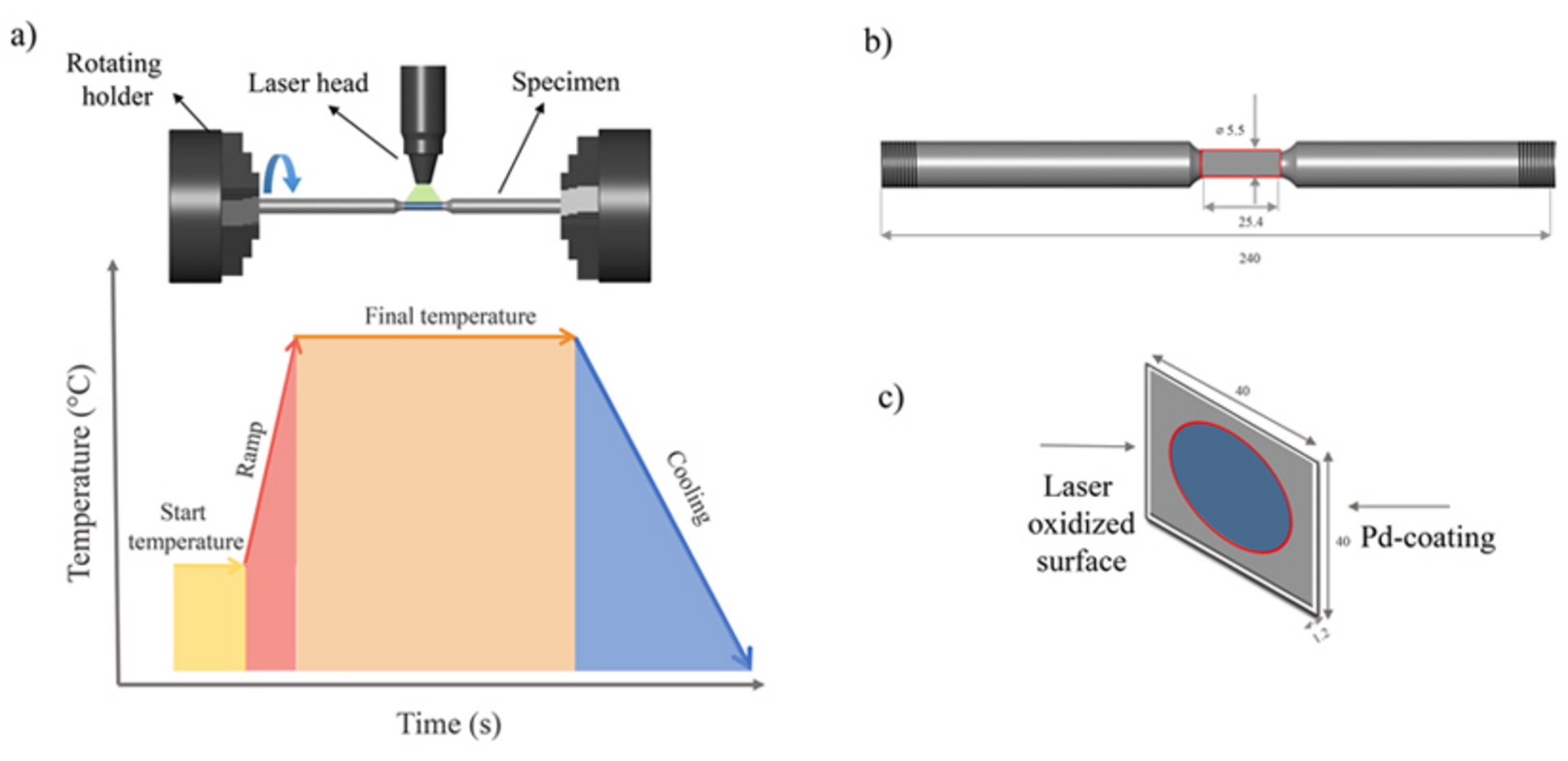
In this work laser oxidation of the tempered martensitic steel was performed and the effect of the formed oxide layer on hydrogen embrittlement (HE) susceptibility was investigated. Influence of the laser process temperature on the morphology and the protectiveness of the oxide layer was scrutinized in the range 450-800 °C utilizing Slow Strain Rate Tensile (SSRT) tests combined with electrochemical hydrogen charging. In addition, pre-treatment of the steel with an organic additive was employed to enhance the functional performance of the oxide layer through modification of oxidation kinetics. The optimal oxidation conditions were obtained at 600 °C, resulting in a mixed oxide layer structure consisting of Fe3O4 and Fe2O3 phase with a thickness in the range of 100 nm. Oxide layers formed on the steel surface exhibited effective hydrogen barrier properties, reducing hydrogen uptake by approximately 30% under electrochemical charging conditions and by up to 95% in a gaseous hydrogen atmosphere as quantified by Thermal Desorption Spectroscopy (TDS). Hydrogen diffusion inhibition was further confirmed by electrochemical permeation measurements, showing a reduced effective diffusion coefficient. HE susceptibility index derived from the tensile tests indicated 25% higher resistance to hydrogen-induced damage.